AbsolutePath

Knowledge is born
from effort.

Deliberate practice supports encoding.

Passive consumption can feel productive: we cover a lot in a short time. But covering content is not the same as learning it.

Encoding is how the brain turns experience into memory. Paying attention, making sense of an idea, and connecting it to what we already know help shape that process.

To learn efficiently, we need to do that mental work. AbsolutePath creates the structure: explain ideas in your own words, practise recalling them, and use feedback to deepen your understanding.

Research behind the approach

Read the research journal

The studies, my takeaways, and how they shape AbsolutePath.

Information is rephrased in your own words, encoded into your memory as a new connection, and retrieved in response to a question.

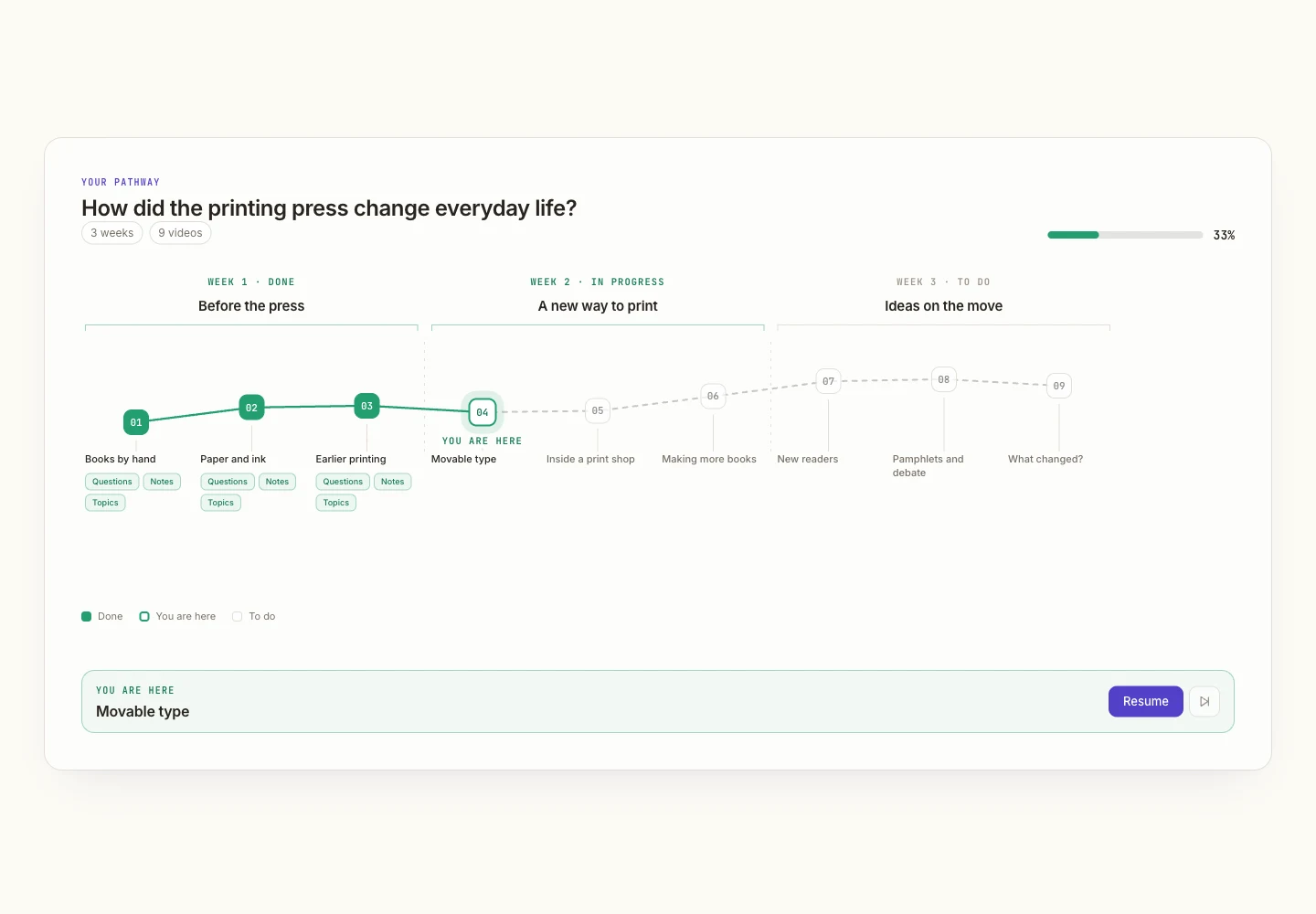
Turn a goal into a route.

With Pathways, start with what you want to learn. Turn your goal into ordered objectives and selected videos, then review the route before you begin.

A history learning pathway with ordered objectives and selected videos
Example pathway · The printing press and everyday life

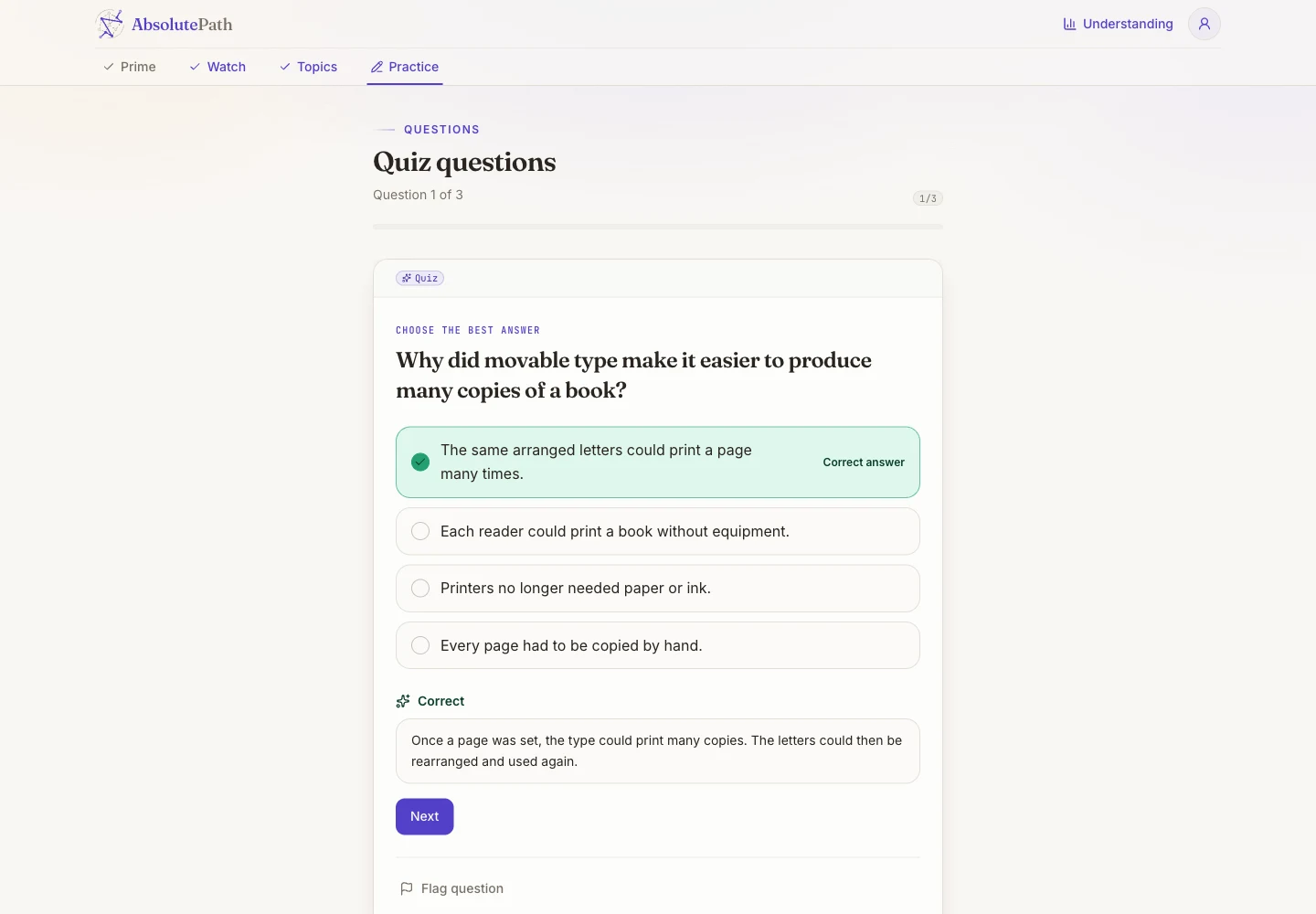
One video, an active learning flow.

Prime your attention. Watch and take notes. Choose the topics that matter. Practice them, then come back for review later.

A printing-press history practice question with a selected answer and feedback
Example session · Recall an idea, then check your answer.

Find what needs another pass.

Find My Gaps asks you to explain ideas from your material. Use the questions and feedback to see what you can explain and choose what to revisit.

Find My Gaps material workspace with Normandy landings and human circulation sessions
Illustrative sessions · Your material, questions and results together.